Trauma and emergency surgery
Surgery for people who have been badly injured.
- Road traffic injuries, falls from height and workplace injuries
- Chest injuries, including drainage of blood and air from around the lung
- Abdominal injuries, including bleeding inside the abdomen
- Blast and penetrating injuries
- Physical assault and violence-related injuries
Acute care and general surgery
Urgent operations that cannot wait.
- Emergency abdominal operations
- Minimally invasive (keyhole) surgery for abdominal trauma
- Wound care, infection control and complex dressings
- Breast disease assessment and surgery
Surgical critical care
Looking after the sickest patients after surgery.
- Assessment of critically ill and injured patients
- Scoring systems that predict risk and guide treatment
- Care of patients on breathing and circulation support
Running an emergency department
Making sure a busy casualty department works for everyone.
- Leading the Casualty Department of Chittagong Medical College
- Triage systems so the sickest patients are seen first
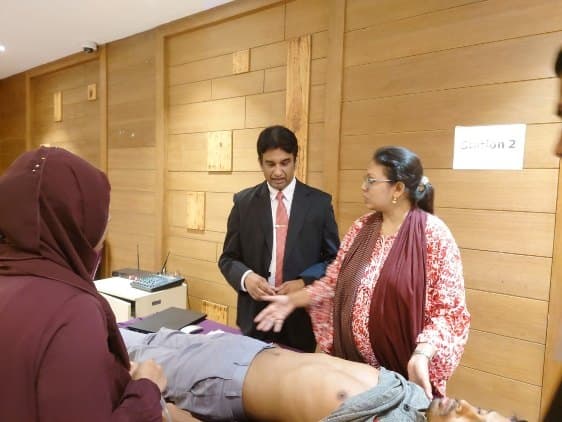
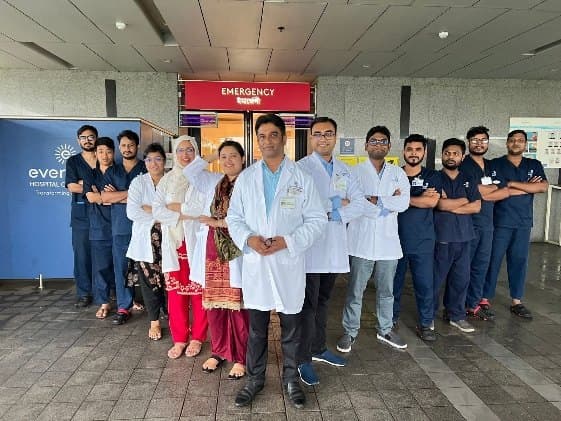
- Training and supervising junior doctors and nurses on every shift
Surgical work
The operations and the patients
Trauma surgery is not one operation but a whole discipline: finding the injury quickly, stopping the bleeding, and deciding what can safely wait.
Want a training programme for your team?
Hospitals, colleges, factories and offices can request a life support, first responder or trauma care session.